

The hardware industry is booming, driven by innovations in cloud computing, AI, and edge technologies. Careers in this field often focus on designing, maintaining, and optimizing data center infrastructure. Here’s a quick overview of key roles in hardware:
- Hardware Engineers: Focus on circuit design, system testing, and performance optimization. Typically requires a degree in Electrical or Computer Engineering.
- Infrastructure Architects: Plan scalable, efficient data center systems with a focus on disaster recovery and redundancy.
- Data Center Technicians: Handle hardware setup, maintenance, and troubleshooting, with clear progression from entry-level to management roles.
- Hardware Security Specialists: Protect physical systems and ensure compliance with security standards.
- Emerging Roles: AI Hardware Specialists and Edge Computing Experts are in demand due to advancements in AI and decentralized infrastructure.
Quick Comparison of Key Roles
| Role | Focus Areas | Key Skills/Certifications |
|---|---|---|
| Hardware Engineers | Circuit design, system testing | Electrical design, digital architecture |
| Infrastructure Architects | Scalable systems, disaster recovery | Network protocols, strategic planning |
| Data Center Technicians | Hardware maintenance, monitoring | Server certifications, virtualization |
| Hardware Security | Physical security, compliance | Security protocols, access control |
| Edge Computing Roles | Distributed systems, AI integration | Edge systems, AI hardware expertise |
The hardware field is also evolving with trends like green data centers and AI-driven optimization. To stay relevant, focus on certifications in edge computing, energy-efficient systems, and AI integration. Whether you’re starting as a technician or aiming for senior roles, this industry offers diverse opportunities for growth.
Working in an AWS Data Center - Meet Luis, Engineering Operations Technician

Main Hardware Career Paths
As data centers expand and become more complex, specific hardware roles are critical to keeping operations smooth and driving advancements in the industry.
Hardware Engineer Roles
Hardware engineers play a key role in data center operations. A BS in Electrical or Computer Engineering and at least 8 years of experience are typically required for these positions [1]. Their main responsibilities include:
| Responsibility | Required Skills |
|---|---|
| Electrical Design | Expertise in high-speed digital design |
| System Testing | Knowledge of power conversion systems |
| Hardware Validation | Circuit design and troubleshooting skills |
| Performance Optimization | Understanding of digital system architecture |
Infrastructure Architect Jobs
Infrastructure architects focus on designing and implementing solutions for data centers. This role blends technical skills with strategic planning [2]. Their responsibilities include:
- Designing scalable frameworks for data center infrastructure
- Implementing enterprise-grade network protocols and systems
- Developing disaster recovery plans for large-scale operations
- Building redundant backup systems for critical operations
Data Center Tech Positions
Data center technicians handle essential facility operations, with tasks varying based on experience level [2][3].
| Position Level | Primary Responsibilities | Required Certifications |
|---|---|---|
| Entry Level | Installing hardware, performing basic maintenance | Server hardware certification |
| Mid Level | Troubleshooting systems, monitoring performance | Certifications in virtualization technologies |
| Senior Level | Leading teams, optimizing infrastructure | Advanced infrastructure certifications |
Hardware Security Jobs
Hardware security professionals protect the physical and operational integrity of data center infrastructure [2]. Their responsibilities include:
- Managing physical security systems and access controls
- Monitoring compliance and addressing security threats
- Creating security frameworks for critical infrastructure
With advancements like AI and edge computing, hardware professionals are finding new opportunities in the rapidly evolving data center landscape.
New Technology Impact on Jobs
The hardware career field is undergoing major changes thanks to the rise of new technologies. Here's how AI, edge computing, and green initiatives are shaping the future of hardware roles.
AI and ML in Hardware
Artificial intelligence (AI) and machine learning (ML) are revolutionizing how hardware systems operate, leading to new, specialized roles in data centers.
| AI Impact Area | Role Changes | Key Skills Needed |
|---|---|---|
| System Optimization | Diagnostics and efficiency analysis | ML interpretation, data analytics |
| Infrastructure Management | Automated resource allocation | AI systems integration |
For example, Microsoft cut hardware downtime by 35% in 2022 by using AI-driven predictive analytics. This shows how integrating AI is creating new opportunities for specialists in hardware operations.
Edge Computing Jobs
Edge computing is rapidly growing, with predictions that it will handle 75% of enterprise data by 2025 [2]. This shift is driving demand for roles like Edge Hardware Architects and Distributed Systems Engineers. The edge computing market, expected to hit $43.8 billion by 2027 [5], underscores the need for experts in managing distributed hardware systems. As edge computing grows, professionals will need to adjust to the challenges of decentralized infrastructure.
Green Data Center Skills
Sustainability is now a key focus in hardware careers. Dr. Jennifer Cooke highlights this shift:
"The future of data centers is not just about efficiency but also about sustainability. Green data centers are not a trend but a necessity."
| Green Technology Area | Essential Skills | Focus Area |
|---|---|---|
| Energy-Efficient Hardware | Power management optimization | Improving PUE |
| Cooling Systems | Thermal design expertise | Reducing energy use |
| Renewable Integration | Building sustainable systems | Cutting carbon output |
With 71% of companies placing a high priority on sustainability [4], professionals who bring expertise in green hardware technologies are becoming more sought after. These changes emphasize the need for hardware specialists to keep pace with a fast-changing industry.
sbb-itb-d22037a
Data Center Directory Tools
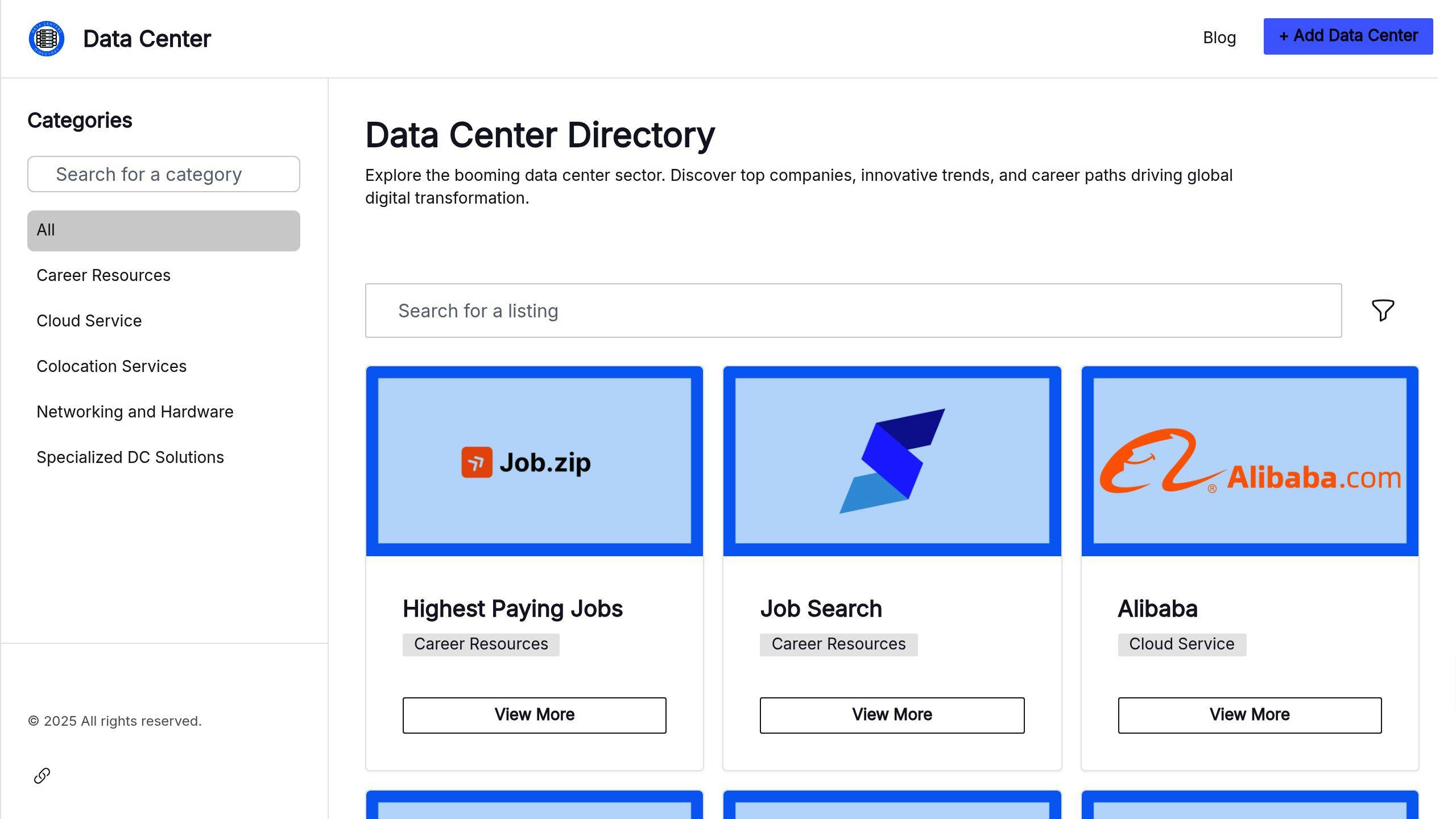
The Data Center Directory offers focused resources to help hardware professionals navigate the job market more effectively.
Career Search Features
The career search platform includes tools specifically designed for hardware professionals:
| Tool Feature | Primary Function | Key Benefits |
|---|---|---|
| Salary Calculator | Analyzes regional compensation across hardware roles | Helps you make better decisions during negotiations |
| Skills Assessment | Maps technical requirements | Pinpoints gaps in your qualifications |
| Job Alert System | Sends real-time notifications for new positions | Keeps you updated on the latest openings |
Through partnerships with top industry players, the directory also provides early access to exclusive roles in areas like edge computing and AI hardware.
Hardware Job Categories
The directory breaks down hardware roles into clear categories, aligning with industry needs and helping professionals find positions that match their skills and career goals.
| Category | Focus Areas | Required Skills |
|---|---|---|
| Infrastructure Engineering | Data center design, cooling systems | Hardware architecture, thermal management |
| Hardware Security | Physical security, access control | Security protocols, compliance standards |
| Maintenance Operations | Equipment upkeep, system monitoring | Diagnostic tools, preventive maintenance |
Expert insights and market research ensure the directory is updated quarterly, reflecting the latest trends. For instance, hardware security job listings have jumped by 45% since January 2024.
These tools empower professionals to take concrete steps toward advancing their careers in hardware, as detailed in the next section.
Next Steps in Hardware Careers
Career Path Summary
The hardware career field in data centers is constantly changing, driven by new technologies. Professionals in this space need a blend of traditional hardware knowledge and modern technical skills. Career progression often starts with entry-level maintenance roles, moves into mid-level positions focused on optimization and leadership, and can lead to senior roles in strategic planning and architecture [8].
As data centers integrate AI, edge computing, and environmentally friendly technologies, professionals should focus on updating their skills to stay relevant. Understanding this career path is the first step toward identifying strategies for breaking into and advancing within the industry.
Getting Started Guide
Building a successful hardware career requires a mix of technical know-how and interpersonal skills. Here are some practical steps to help you begin and grow in this field:
-
Develop Core Skills and Gain Experience
- Learn about server hardware, cabling, and power systems.
- Work on lab projects and internships to gain practical knowledge.
- Set up personal labs for hands-on practice.
- Explore data center internship programs offered by established companies [6].
-
Pursue Advanced Certifications
| Certification Type | Focus Area | Career Advantage |
|---|---|---|
| Infrastructure Architecture | System Design | Leadership Opportunities |
| Green Data Center | Energy Efficiency | Specialized Roles |
| Edge Computing | Distributed Systems | New Technology Expertise |
- Expand Your Professional Network
- Join industry groups and associations.
- Contribute to open-source hardware projects.
- Attend conferences and technical workshops.
- Build connections with seasoned professionals [4].
Combining certifications with real-world experience can fast-track your career, especially in areas like edge computing and sustainable data center operations.
FAQs
What is the career path for a data center technician?
Data center technicians progress through well-defined stages that blend education, certifications, and practical experience. They play a critical role in maintaining hardware operations and supporting infrastructure improvements [6].
| Career Stage | Role | Key Responsibilities |
|---|---|---|
| Entry Level | Junior Technician | Setting up and maintaining hardware |
| Mid-Level | Senior Technician | Optimizing systems and solving technical issues |
| Advanced | Operations Manager | Planning infrastructure and leading teams |
At the entry level, technicians need a solid understanding of hardware basics. Mid-level and advanced positions require not only technical expertise but also leadership and strategic planning skills [2]. Their tasks range from managing server performance to performing backups and resolving hardware issues. Over time, many technicians choose to specialize in areas like cloud systems, security, or infrastructure design [4].
To grow in this field, it’s essential to gain expertise in technologies like AI and machine learning as they integrate with data center operations [7]. Industry experts emphasize that successful technicians excel by combining technical know-how with problem-solving and strong communication skills [4].
As technology evolves, so does the role of a data center technician. Staying updated on advancements like edge computing and environmentally friendly data center practices is crucial [7]. Those who keep pace with these changes will find ample opportunities in the growing data center industry.